Stone Insights
How to Choose the Right Marble for Kitchen Countertops: A Complete Buyer's Guide
Marble Variety, Finish, Cost & Maintenance Considerations for 2026
By Xiamen Sun Young Editorial Team · 11 min read
Key Takeaways
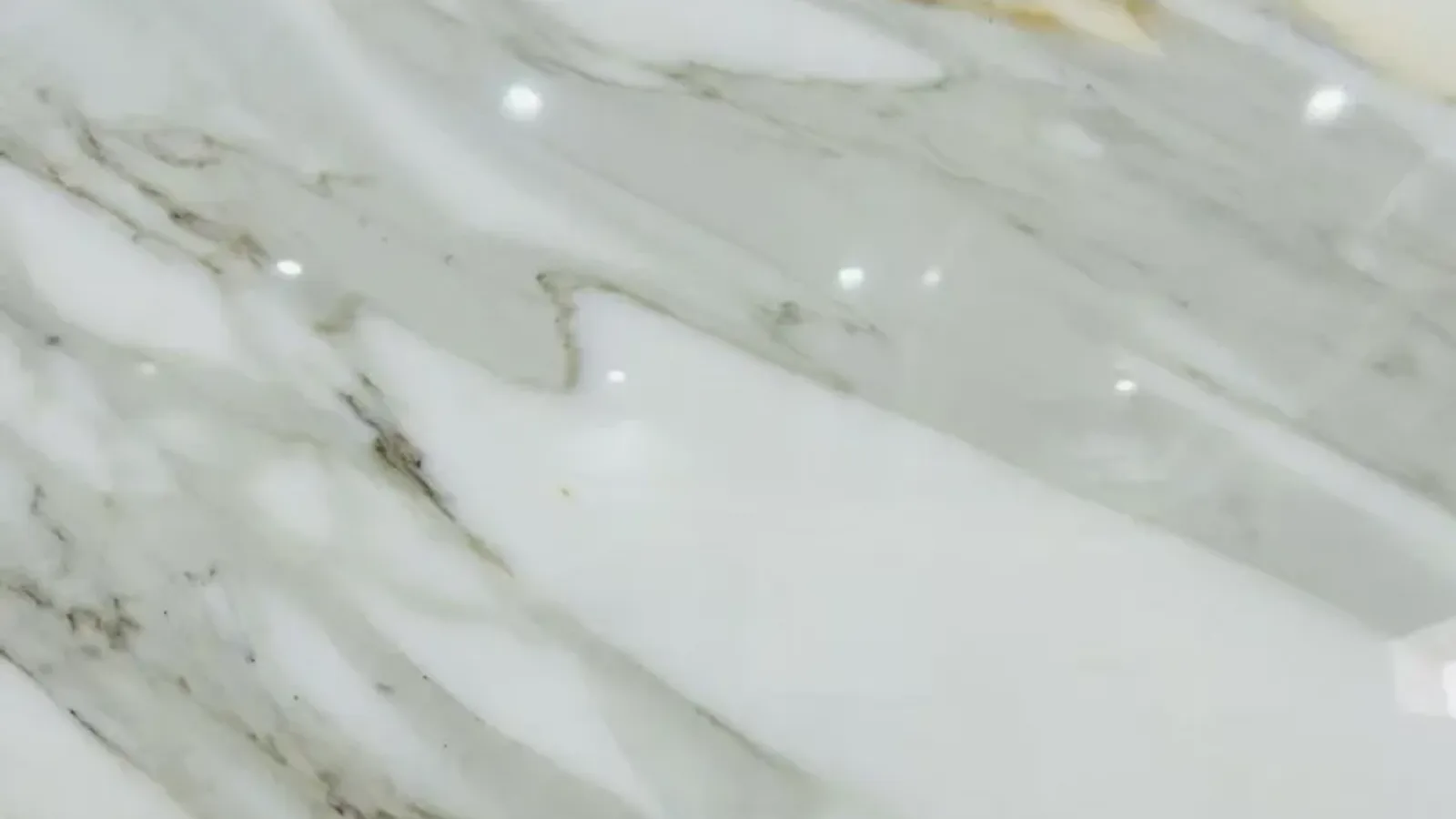
**Key Takeaways:** Choose marble for kitchen countertops based on three factors: veining preference (bold Calacatta vs subtle Carrara), lifestyle (sealing commitment and stain tolerance), and budget. Calacatta Gold and Statuario command premium prices ($150-$300/sqft installed) due to limited quarry yield, while Carrara offers the marble look at $50-$100/sqft. Always specify a honed or leathered finish for high-use kitchens — polished finishes show etching within weeks. Seal marble at installation and re-seal every 6-12 months. For heavy-use families, consider quartzite alternatives like Taj Mahal that mimic marble aesthetics with superior durability.
---
Marble has been the material of choice for kitchen countertops in luxury homes, boutique hotels, and high-end restaurants for centuries — and for good reason. Few materials combine natural beauty, heat resistance, and timeless appeal the way natural marble does. But not all marble is created equal, and choosing the right variety for your kitchen requires understanding the differences between Calacatta, Carrara, Statuario, and the dozens of other varieties available in today's global market.
After 24 years of exporting natural stone to 40+ countries, we've seen every common mistake buyers make — from choosing the wrong variety for their lifestyle to underestimating long-term maintenance. This comprehensive guide distills everything we've learned into a practical framework for selecting marble that will look beautiful and perform well for decades.
- **What you'll learn in this guide:**
- The 7 most popular marble varieties for kitchen countertops (and their trade-offs)
- Which finishes work best in kitchens — and which to avoid
- Real 2026 pricing ranges (and what drives cost differences)
- How marble compares to granite and quartzite for kitchen use
- A practical 5-step selection process used by professional designers
- How to maintain your marble countertop for 20+ years
*Marble Variety, Finish, Cost & Maintenance Considerations for 2026*
What Makes Marble Good for Kitchen Countertops?
Before we dive into variety selection, let's establish why marble remains a top choice for kitchen countertops in 2026 — even with the rise of engineered quartz and porcelain alternatives.
1. Natural Beauty That Cannot Be Replicated
Every marble slab is a one-of-a-kind piece of geological art formed over millions of years. The interplay of veining, base color, and crystalline structure gives natural marble a depth and authenticity that engineered surfaces cannot match. When clients walk into a kitchen with [Calacatta Gold Marble](/products/calacatta-gold-marble/), the immediate reaction is different from any other material.
2. Naturally Cool Temperature
Marble's high thermal mass makes it naturally cool to the touch — a property professional bakers have valued for centuries. This is why marble remains the gold standard for pastry kitchens and baking stations in luxury residences.
3. Heat Resistance
Unlike quartz or solid surface materials, marble can withstand direct contact with hot pots and pans without scorching or discoloration. Brief contact with a 400°F pan will not damage a properly sealed marble surface.
4. Longevity When Properly Maintained
Marble countertops in European cathedrals have lasted 1,000+ years. With proper sealing and care, a marble kitchen countertop can easily outlast multiple remodels — often 30-50 years before requiring refinishing.
5. Adds Measurable Resale Value
Natural stone countertops consistently rank in the top 5 features that buyers look for in luxury homes. A 2025 Houzz study found that 78% of buyers in the $1M+ segment prefer natural stone over engineered alternatives.
What Are the Disadvantages of Marble Countertops?
Marble is not for every kitchen. Honest assessment of limitations is what separates a successful 20-year installation from a regretted 2-year decision.
1. Etching from Acidic Substances
Marble is calcium carbonate, which reacts with acids. Lemon juice, wine, vinegar, and tomato sauce will etch polished marble surfaces within seconds of contact. Etching is surface damage — it does not affect structural integrity but creates visible dull spots, especially on dark marble like [Nero Marquina Marble](/products/nero-marquina-marble/).
**The fix:** Specify a honed or leathered finish. Etching is far less visible on textured surfaces than on polished ones.
2. Staining Risk
Marble is porous. Without proper sealing, oils, coffee, and wine can penetrate and leave permanent discoloration. Light-colored marbles like [Carrara White Marble](/products/carrara-white-marble/) show stains more readily than darker varieties.
**The fix:** Seal at installation with a penetrating sealer, re-seal every 6-12 months, and clean spills immediately.
3. Chipping and Scratching
Marble ranks 3-5 on the Mohs hardness scale — softer than granite (6-7) and quartzite (7). Heavy pots, ceramic dishes, and sharp knives can scratch or chip edges. Edge profiles with sharp 90° corners (like a square edge) are most vulnerable.
**The fix:** Choose a rounded or bullnose edge profile, use cutting boards, and avoid dragging heavy cookware.
4. Requires Regular Maintenance
Unlike quartz or porcelain that requires only soap and water, marble needs periodic sealing, pH-neutral cleaners, and immediate spill response. For low-maintenance households, this commitment is significant.
How to Choose the Right Marble Variety for Your Kitchen
Italy produces over 50 commercially significant marble varieties, with new options coming from Brazil, Greece, Turkey, and Vietnam each year. Here are the 7 varieties most commonly specified for kitchen countertops in our 24 years of export experience.
1. Calacatta Gold Marble — The Luxury Standard
[Calacatta Gold Marble](/products/calacatta-gold-marble/) is sourced from limited quarries in the Apuan Alps of Carrara, Italy. Its bold gold and gray veining on a warm white background makes it one of the most sought-after marbles in luxury residential and hospitality projects. Calacatta has a tighter, more dramatic veining pattern than Carrara.
- **Origin:** Carrara, Italy (Apuan Alps)
- **Base color:** Warm white to creamy
- **Veining:** Bold gold, gray, and amber
- **Best for:** Statement kitchen islands, waterfall edges, focal-point countertops
- **Price range (slab):** $150-$300/sqft
- **Maintenance:** Medium — sealing every 6-9 months
2. Calacatta White Marble — Pure Drama
[Calacatta White Marble](/products/calacatta-white-marble/) features the same Italian origin as Calacatta Gold but with predominantly gray veining on a brighter white background. It's the variety most commonly seen in high-end architectural publications and luxury hotel installations.
- **Origin:** Carrara, Italy
- **Base color:** Bright cool white
- **Veining:** Dramatic gray, sparse
- **Best for:** Modern minimalist kitchens, waterfall edges
- **Price range (slab):** $120-$250/sqft
3. Statuarietto White Marble — Refined Elegance
[Statuarietto White Marble](/products/statuarietto-white-marble/) is a tighter-veined, more uniform version of Calacatta. It offers the drama of Calacatta with more consistent patterning, making it easier to book-match across large surfaces.
- **Origin:** Carrara, Italy
- **Best for:** Bookmatched feature walls, large kitchen runs
- **Price range (slab):** $100-$200/sqft
4. Carrara White Marble — The Classic
[Carrara White Marble](/products/carrara-white-marble/) is the most widely recognized Italian marble — and the most affordable. Its soft, feathery veining on a grayish-white background has defined luxury kitchens for over 500 years.
- **Origin:** Carrara, Italy
- **Base color:** Grayish white
- **Veining:** Soft, feathery, dense
- **Best for:** Traditional kitchens, secondary surfaces, full-room flooring
- **Price range (slab):** $40-$90/sqft
5. Arabescato White Marble — Artistic Patterning
[Arabescato White Marble](/products/arabescato-white-marble/) is distinguished by its intricate, web-like veining patterns. Each slab is a unique work of art, making it ideal for statement applications.
- **Origin:** Italy
- **Best for:** Backsplashes, accent islands, decorative panels
- **Price range (slab):** $80-$180/sqft
6. Nero Marquina Marble — Bold Contrast
[Nero Marquina Marble](/products/nero-marquina-marble/) is a black marble from Spain with striking white veining. Its dark color hides etching better than white marbles, making it more forgiving in active kitchens.
- **Origin:** Spain (Markina region)
- **Base color:** Deep black
- **Veining:** White, dramatic
- **Best for:** Waterfall islands, dramatic contrast in modern kitchens
- **Price range (slab):** $60-$130/sqft
7. Taj Mahal Quartzite — The Marble-Look Alternative
[Taj Mahal Quartzite](/products/taj-mahal-quartzite/) is technically a quartzite, not a marble, but its warm cream tones and subtle veining make it a popular marble alternative for high-use kitchens. Quartzite is harder than marble and more resistant to etching and staining.
- **Origin:** Brazil
- **Mohs hardness:** 7 (vs marble 3-5)
- **Best for:** Family kitchens, outdoor kitchens, commercial applications
- **Price range (slab):** $90-$200/sqft
Best Marble Finishes for Kitchens
The finish you specify affects both aesthetics and maintenance. Here are the 5 standard finishes and our recommendations for kitchen applications.
Polished Finish
**Characteristics:** Mirror-like gloss, vibrant color, sharp veining detail.
**Kitchen use:** ⚠️ Use with caution. Polished marble shows every fingerprint, water spot, and etching within weeks of installation. Reserve for low-use surfaces like baking stations or accent islands.
Honed Finish ⭐ (Recommended)
**Characteristics:** Smooth, matte surface with soft sheen.
**Kitchen use:** ✅ Best choice for most kitchens. Etching is far less visible, fingerprints disappear, and the soft appearance ages beautifully. This is the finish we recommend for 80% of our kitchen clients.
Leathered Finish ⭐ (Recommended)
**Characteristics:** Slightly textured, soft sheen with subtle dimensional quality.
**Kitchen use:** ✅ Excellent for darker marbles like Nero Marquina and for busy households. The texture hides fingerprints and minor etching completely.
Brushed Finish
**Characteristics:** Antique, weathered appearance.
**Kitchen use:** ✅ Works well in rustic, Tuscan, or farmhouse kitchen designs. Hides wear patterns over time.
Bush-Hammered Finish
**Characteristics:** Heavy texture, slip-resistant.
**Kitchen use:** ⚠️ Too rough for countertops. Best for outdoor kitchens and flooring applications.
How Much Does Marble Countertop Cost?
Marble countertop costs in 2026 vary widely based on variety, origin, finish, edge profile, and installation complexity. Here are realistic ranges based on our recent export pricing.
Material Cost Per Square Foot (Slab Only)
| Variety | Price Range (USD/sqft) | Tier |
|---------|----------------------|------|
| Calacatta Gold | $150-$300 | Premium |
| Calacatta White | $120-$250 | Premium |
| Statuario / Statuarietto | $100-$200 | Premium |
| Arabescato | $80-$180 | Mid-Premium |
| Taj Mahal Quartzite | $90-$200 | Mid-Premium |
| Carrara White | $40-$90 | Mid-Range |
| Nero Marquina | $60-$130 | Mid-Range |
Total Installed Cost
Add fabrication, edge profiling, cutouts (sink/cooktop), and installation:
- **Material (slab):** 40-50% of total
- **Fabrication:** 25-30% of total
- **Installation:** 15-20% of total
- **Edge profile upgrade:** $15-$40/linear foot
- **Realistic total installed cost for a typical 50 sqft kitchen:**
- Calacatta Gold: $8,000-$15,000
- Calacatta White: $6,500-$12,500
- Carrara White: $2,500-$5,000
Hidden Costs to Budget For
- **Sealing at installation:** $200-$400
- **Annual re-sealing (DIY or pro):** $50-$300
- **Edge profile upgrade:** Many fabricators charge extra for ogee, dupont, or waterfall edges
- **Backsplash matching slabs:** Often forgotten — budget 15-20 sqft extra
- **Removal of old countertops:** $200-$500 if applicable
Marble vs Granite vs Quartzite for Kitchens
Many clients ask us whether marble is really the right choice versus granite or quartzite. Here's an honest comparison based on 24 years of feedback from architects, designers, and homeowners.
| Property | Marble | Granite | Quartzite |
|---------|--------|---------|-----------|
| **Mohs hardness** | 3-5 | 6-7 | 7 |
| **Stain resistance** | Low (with sealer) | High | Medium-High |
| **Etch resistance** | Low | High | Medium-High |
| **Heat resistance** | Excellent | Excellent | Excellent |
| **Color variety** | Limited (whites, grays, blacks, beiges) | Extensive | Moderate |
| **Pattern consistency** | Variable (natural variation) | Consistent | Variable |
| **Maintenance commitment** | High | Low | Medium |
| **Price range** | $40-$300/sqft | $30-$150/sqft | $70-$200/sqft |
| **Best for** | Aesthetic priority, baking kitchens | Heavy-use families | Marble-look + durability |
| **Lifespan with care** | 30-50+ years | 30+ years | 30+ years |
**Our recommendation:** Choose marble if aesthetic priority and timeless beauty are non-negotiable. Choose granite if you have young children and prioritize low maintenance. Choose quartzite like [Taj Mahal Quartzite](/products/taj-mahal-quartzite/) if you want marble aesthetics with better durability.
The 5-Step Marble Selection Process Used by Professionals
After 24 years of supplying marble to 40+ countries, we've refined a 5-step process that professional designers and architects use to consistently select the right marble for any project.
Step 1: Define the Aesthetic Priority
Is this a statement kitchen (Calacatta Gold dramatic veining) or a subtle background surface (Carrara soft veining)? Your answer determines which 2-3 varieties to consider.
Step 2: Assess Lifestyle Compatibility
Be honest about cooking habits. A serious home cook with frequent wine, lemon, and tomato use should lean toward darker marbles (Nero Marquina) or quartzite alternatives (Taj Mahal). A household that uses the kitchen for reheating and entertaining can comfortably choose any Calacatta variety.
Step 3: View Full Slabs, Not Samples
Never specify marble from a 4x4 inch sample. Veining patterns and base color variation require viewing full slabs. We strongly recommend visiting our Xiamen facility (or your supplier's warehouse) to view multiple slabs side-by-side before final selection.
Step 4: Confirm Finish and Edge Profile
Finalize finish (honed vs leathered vs polished) and edge profile (eased, bullnose, ogee, waterfall) before fabrication begins. Changes mid-fabrication are expensive.
Step 5: Budget for Long-Term Maintenance
Order penetrating sealer, pH-neutral cleaner, and stain-removal poultice at installation. Build a 5-year maintenance budget of $200-$500 for re-sealing and occasional professional polishing.
How to Maintain Your Marble Countertop
Maintenance is the single most important factor in whether your marble countertop ages beautifully or shows premature wear. For a complete daily-care guide, sealing frequency, and stain removal techniques, see our comprehensive guide: **[How to Maintain Marble Countertops: Daily Care, Sealing & Stain Removal](/products/how-to-maintain-marble-countertops/)**.
- **Quick reference:**
- Seal at installation and every 6-12 months
- Clean with pH-neutral cleaner only (no vinegar, no citrus)
- Wipe spills within 5 minutes, especially acids
- Use cutting boards and trivets
- Re-polish every 3-5 years if needed
Choosing Marble with Confidence
Marble kitchen countertops are an investment in beauty, longevity, and resale value. The key to a successful 20-year installation is honest assessment of your lifestyle, careful variety selection, and commitment to proper maintenance from day one.
If you're ready to explore marble options for your project, our team at Xiamen Sun Young is here to help. We've supplied natural stone to architects, designers, and contractors in 40+ countries over 24 years, and we offer full-service support from variety selection through slab reservation, fabrication oversight, and export logistics.
- **Next steps:**
- Review our [Calacatta Gold Marble](/products/calacatta-gold-marble/), [Carrara White Marble](/products/carrara-white-marble/), and [Taj Mahal Quartzite](/products/taj-mahal-quartzite/) product pages
- Request slab photos and current inventory from our sales team
- Schedule a virtual slab selection session with our Xiamen warehouse
- Request a detailed quote including fabrication, edge profiles, and export logistics
*Have a question about marble selection for your specific project? Contact our editorial team — we respond to every inquiry within 24 hours.*
Frequently Asked Questions
Is marble good for kitchen countertops?
Yes, marble is an excellent choice for kitchen countertops if you value natural beauty, heat resistance, and timeless appeal, and are willing to commit to regular sealing and prompt spill cleanup. For heavy-use family kitchens, consider quartzite alternatives like [Taj Mahal Quartzite](/products/taj-mahal-quartzite/).
What is the best marble variety for kitchen countertops?
The best variety depends on your aesthetic priority and lifestyle. For luxury statement kitchens, [Calacatta Gold Marble](/products/calacatta-gold-marble/) is the top choice. For more affordable elegance, [Carrara White Marble](/products/carrara-white-marble/) remains the industry classic. For dramatic contrast, [Nero Marquina Marble](/products/nero-marquina-marble/) is ideal.
How often should I seal marble countertops?
Seal at installation, then re-seal every 6-12 months depending on use. To test, sprinkle water on the surface — if it doesn't bead up, it's time to re-seal.
Can marble countertops be repaired if scratched or etched?
Minor etching can be polished out with marble polishing powder. Deeper scratches and chips require professional repair. Severely damaged surfaces can be re-honed and re-polished by stone restoration professionals at a fraction of replacement cost.
How long do marble countertops last?
With proper care, marble countertops last 30-50+ years. Many European buildings have original marble surfaces over 100 years old still in use.
Is marble more expensive than granite?
Mid-range marble (Carrara) and mid-range granite are similarly priced. Premium marble varieties (Calacatta, Statuario) are typically 30-50% more expensive than premium granite. Quartzite sits between marble and premium granite.
Should I choose honed or polished marble for kitchen?
We recommend honed or leathered for 80% of kitchen applications. Polished marble shows every fingerprint, water spot, and etching. Honed surfaces hide minor wear and develop a beautiful patina over time.
What's the difference between Calacatta and Carrara marble?
Both come from the Carrara region of Italy, but Calacatta has bolder, more dramatic veining on a warmer white background, while Carrara has softer, denser veining on a grayer background. Calacatta is also rarer and 2-3x more expensive. See our complete guide: [Calacatta vs Carrara Marble: What's the Difference?](/products/calacatta-vs-carrara-marble-difference/).
Topics: marble kitchen countertops, buyers guide, kitchen design, natural stone, countertop selection