Stone Insights
Understanding Marble Grades and Quality Standards: A Buyer's Reference
Commercial vs Premium vs First Choice · ASTM & ISO Standards Explained
By Xiamen Sun Young Editorial Team · 9 min read
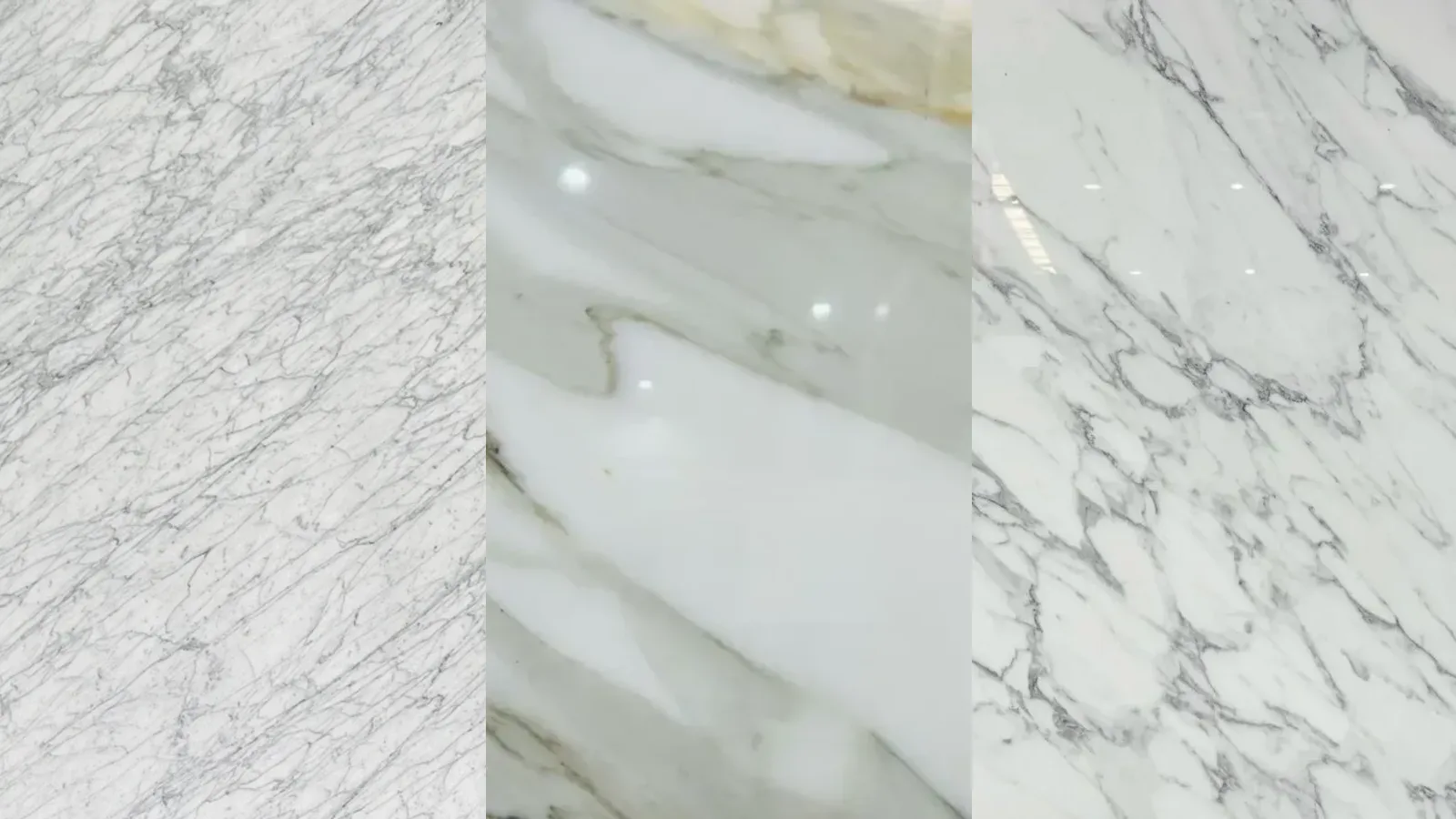
Key Takeaways
**Key Takeaways:** Marble is graded using three main tiers — Commercial (lowest, most affordable), Premium (mid-range), and First Choice (highest, rarest). Each tier has specific criteria: visual defects (veining consistency, color uniformity), structural integrity (no cracks or fissures), and dimensional tolerance (thickness, squareness). Industry standards include ASTM C503 (American), EN 14618 (European), and MIA Dimension Stone Design Manual. As a buyer, evaluate 5 key criteria: visual appearance, dimensional accuracy, structural soundness, finish quality, and origin documentation. Premium and First Choice grades cost 30-200% more than Commercial but offer superior aesthetic consistency and longevity.
---
Marble grading is one of the most misunderstood aspects of stone procurement. Unlike engineered materials with uniform quality, natural marble varies significantly — and understanding the grading system is essential for specifying the right material at the right price for your project.
After 24 years of exporting marble to 40+ countries, we've seen every common mistake buyers make when evaluating marble quality. This guide demystifies the grading system, explains industry-accepted standards, and gives you the framework to evaluate marble quality like a professional.
- **What you'll learn in this guide:**
- The 3 main marble grading tiers (Commercial, Premium, First Choice)
- The 5 quality criteria that determine marble grade
- Industry standards: ASTM C503, EN 14618, MIA guidelines
- How to identify common marble defects
- A practical 5-criteria evaluation framework
- How Sun Young grades marble for export quality
- When premium grades justify the cost premium
*Commercial vs Premium vs First Choice · ASTM & ISO Standards Explained*
What Is Marble Grading?
Marble grading is a standardized system for evaluating and categorizing marble quality based on visual, structural, and dimensional criteria. Grading occurs at multiple stages: quarry block inspection, slab cutting evaluation, and final quality control.
The 3-Tier Grading System
Most marble producers and exporters use a three-tier system, though specific names vary by region and supplier. Here are the most commonly accepted tier names.
Tier 1: First Choice (Premium Grade)
**Quality:** Highest grade available
- **Visual characteristics:**
- Consistent base color throughout the slab
- Well-distributed, dramatic veining
- Minimal color variation between slabs
- No visible defects (cracks, chips, pits)
- **Structural characteristics:**
- Excellent structural integrity
- No fissures or weak points
- Dimensional accuracy within 1mm tolerance
- **Typical applications:**
- Luxury residential projects
- High-end hotel installations
- Featured applications (waterfall islands, accent walls)
- Calacatta and premium Statuario varieties
**Price premium:** 50-200% above Commercial grade
- **Examples of First Choice marble:**
- Premium [Calacatta Gold Marble](/products/calacatta-gold-marble/) with bold, consistent veining
- Top-grade [Statuarietto White Marble](/products/statuarietto-white-marble/) for book-matched installations
Tier 2: Premium (Mid-Range Grade)
**Quality:** Mid-range, suitable for most applications
- **Visual characteristics:**
- Good base color consistency with minor variation
- Clear veining patterns, well distributed
- Some color variation between slabs (acceptable in many designs)
- Minimal defects, properly filled if present
- **Structural characteristics:**
- Good structural integrity
- Minor fissures acceptable if reinforced
- Dimensional accuracy within 2mm tolerance
- **Typical applications:**
- Standard residential projects
- Commercial buildings
- General-purpose installations
- Most Carrara and mid-range marble varieties
**Price premium:** 20-50% above Commercial grade
Tier 3: Commercial (Standard Grade)
**Quality:** Standard grade, suitable for budget-conscious projects
- **Visual characteristics:**
- Significant color variation acceptable
- Veining may be inconsistent or sparse
- Visible defects filled with resin or epoxy (industry standard)
- Wide variation between slabs
- **Structural characteristics:**
- Adequate structural integrity
- Defects filled with resin for stability
- Dimensional accuracy within 3mm tolerance
- **Typical applications:**
- Budget residential projects
- Large commercial installations
- Secondary surfaces (backsplashes, accent areas)
- General-purpose flooring
**Price point:** Entry-level pricing, varies by variety
Grade Naming Variations
Different suppliers use different grade names for the same quality tier. Here's how they typically map:
| Grade System | Highest | Middle | Standard |
|--------------|---------|--------|----------|
| **Most common** | First Choice / Premium | Standard / Select | Commercial / Builder |
| **Italian system** | Prima Scelta | Seconda Scelta | Commerciale |
| **MIA designation** | Premium | Standard | Commercial |
| **Spanish system** | Primera | Segunda | Comercial |
| **Turkish system** | A-Grade | B-Grade | C-Grade |
When evaluating marble, always ask suppliers for specific grade criteria rather than relying on grade names alone.
Industry Standards: ASTM, EN, and MIA
Beyond proprietary grading systems, several international standards provide objective quality benchmarks for marble specification.
ASTM C503 — American Standard
ASTM C503 is the American Society for Testing and Materials standard for marble dimension stone. It covers:
- **Material classification** (I, II, III) by soundness
- **Physical property requirements** (absorption, density, compressive strength)
- **Dimensional tolerances** for thickness, squareness, edge straightness
- **Finish specifications** for polished, honed, and other surface treatments
- **Key thresholds:**
- **Class I (Sound Marble):** Highest soundness, minimal fissures
- **Class II (Sound Marble with Some Faults):** Moderate soundness, some defects
- **Class III (Marble with Faults):** Lower soundness, more defects acceptable
EN 14618 — European Standard
EN 14618 is the European standard for natural stone dimension stone. It covers similar criteria but is more widely used in European Union projects. Key parameters include dimensional tolerance, flexural strength, and water absorption.
MIA Dimension Stone Design Manual
The Marble Institute of America (now Natural Stone Institute) publishes the Dimension Stone Design Manual, the most comprehensive industry reference. It includes:
- Detailed grading criteria
- Installation specifications
- Maintenance protocols
- Structural design parameters
The MIA manual is the industry-standard reference for architects and engineers specifying natural stone in commercial projects.
Other Standards
- **ISO 10545:** International standard for ceramic tiles (sometimes referenced for stone)
- **ASTM C97:** Absorption and bulk specific gravity of dimension stone
- **ASTM C170:** Compressive strength of dimension stone
- **ASTM C880:** Flexural strength of dimension stone
- **EN 1936:** Determination of real density and apparent density
How to Use Standards in Specification
When specifying marble for architectural projects, include both the variety AND the standard:
**Example specification language:**
>
> Marble: Calacatta Gold, First Choice grade, conforming to ASTM C503 >Class I requirements, EN 14618 compliant, with origin documentation from >quarry partner in Apuan Alps, Italy.
Specific standards give objective quality benchmarks that protect both buyer and supplier.
Common Marble Defects (And What They Mean)
Knowing how to identify marble defects helps you evaluate quality and avoid costly surprises. Here are the most common defects and their implications.
Structural Defects
- **Fissures**
- Natural hairline cracks in the stone
- May be reinforced with resin during processing
- Class I marble has minimal fissures; Class III may have visible ones
- Impact: Fissures don't compromise strength but may affect appearance
- **Cracks**
- Larger breaks in the stone
- Always repaired with resin during processing
- Visible as filled lines on the surface
- Impact: Reduce structural integrity if extensive
- **Chips and Pits**
- Small surface imperfections
- Common at slab edges or veining concentrations
- Impact: Aesthetic, not structural
Visual Defects
- **Color Variation**
- Inconsistent base color across the slab
- Common in natural stone and often considered desirable
- Excessive variation indicates lower grade
- **Veining Inconsistency**
- Irregular or absent veining in some areas
- Expected in natural stone
- Severe inconsistency indicates lower grade
- **Filler Visibility**
- Resin or epoxy fills where natural defects occurred
- Industry standard practice
- Visible filler indicates lower-grade stone or extensive defects
- **Cloudiness or Hazing**
- Surface dullness or lack of clarity
- May indicate poor finishing or improper sealing
- Should not be present on First Choice slabs
Processing Defects
- **Thickness Variation**
- Slab thickness inconsistent from edge to edge
- Should be within 1mm for premium grades
- Impact: Installation difficulty, uneven appearance
- **Edge Damage**
- Chips or breaks at slab edges
- Common during transportation
- Can be cut away during fabrication
- **Surface Scratches**
- Surface marks from handling or processing
- May be polished out during finishing
- Persistent scratches indicate quality control issues
How to Inspect Defects
- When evaluating slabs:
- **Examine in good lighting** (natural daylight is best)
- **Look across the surface at low angle** to detect scratches and dull spots
- **Check edges and corners** for chips
- **Run your hand gently** over the surface to detect unevenness
- **Compare multiple slabs** from same lot to assess consistency
5-Criteria Marble Evaluation Framework
Use this professional framework to evaluate any marble slab consistently.
Criterion 1: Visual Appearance (40% of grade)
- **What to evaluate:**
- Base color consistency and appeal
- Veining pattern quality and distribution
- Overall aesthetic impression
- Color variation across the slab
- **Questions to ask:**
- Does the slab's aesthetic match the project requirements?
- Is veining consistent with the variety's typical pattern?
- Are there any defects that would be visible in the final installation?
Criterion 2: Structural Soundness (25% of grade)
- **What to evaluate:**
- Presence of fissures or cracks
- Quality of resin repairs
- Overall integrity when handled
- **Questions to ask:**
- Are structural defects filled properly?
- Will the slab withstand fabrication and installation?
- Does it meet ASTM C503 Class requirements?
Criterion 3: Dimensional Accuracy (15% of grade)
- **What to evaluate:**
- Thickness consistency (should be within 1-2mm)
- Squareness and edge straightness
- Squareness of slab corners
- **Questions to ask:**
- Does thickness meet specified tolerance?
- Are edges straight and square?
- Will the slab fabricate cleanly?
Criterion 4: Finish Quality (15% of grade)
- **What to evaluate:**
- Surface polish or honing consistency
- Absence of scratches or haze
- Texture uniformity (for honed/leathered finishes)
- **Questions to ask:**
- Does the finish meet specifications?
- Is the surface uniform across the entire slab?
- Are there any finish defects that require rework?
Criterion 5: Origin Documentation (5% of grade)
- **What to evaluate:**
- Quarry source documentation
- Extraction date and block identification
- Compliance with industry standards
- **Questions to ask:**
- Is the marble traceable to a specific quarry?
- Does documentation match the supplier's claims?
- Are industry certifications provided?
Evaluation Score Sheet
Rate each criterion 1-10, then calculate weighted score:
| Criterion | Score (1-10) | Weight | Weighted Score |
|-----------|--------------|--------|-----------------|
| Visual Appearance | ___ | 40% | ___ |
| Structural Soundness | ___ | 25% | ___ |
| Dimensional Accuracy | ___ | 15% | ___ |
| Finish Quality | ___ | 15% | ___ |
| Origin Documentation | ___ | 5% | ___ |
| **Total** | | | **___** |
- **Grade thresholds:**
- **9-10:** First Choice
- **7-8.9:** Premium
- **5-6.9:** Standard
- **Below 5:** Below Commercial grade (rarely sold)
How Sun Young Grades Marble for Export
As a 24-year stone exporter, we've developed our own quality control process that ensures consistent grade classification for international buyers.
Our 4-Stage Quality Control
- **Stage 1: Quarry Block Selection**
- Our quarry partners inspect blocks at extraction
- Blocks are classified into First Choice, Premium, or Commercial
- Block identification numbers link to quarry records
- **Stage 2: Pre-Slab Inspection**
- After gang saw cutting, each slab is inspected individually
- Visual defects are marked for resin filling
- Dimensional accuracy is verified
- **Stage 3: Post-Finishing Inspection**
- Slabs are inspected again after surface finishing
- Any new visible defects are addressed
- Final grade classification is assigned
- **Stage 4: Pre-Shipment Documentation**
- Each slab is photographed and documented
- Origin certificates are prepared
- Grade certification is attached to shipment
What We Guarantee
- When you order marble from Sun Young:
- **Grade match:** Slabs meet the specified grade on delivery
- **Origin verification:** Traceable to specific quarry and extraction date
- **Standard compliance:** ASTM C503 Class I or II as specified
- **Defect disclosure:** All filled defects are clearly documented
- **Dimensional accuracy:** Within 1mm tolerance for premium grades
**Our philosophy:** Better to honestly disclose a grade C marble as grade C than to oversell it as grade A. Reputation matters more than short-term margins in international stone export.
Making Informed Marble Grade Decisions
Understanding marble grading empowers better procurement decisions. Here are the key takeaways:
- **First Choice grade** is worth the premium for featured applications where aesthetic consistency is non-negotiable
- **Premium grade** is the practical choice for most residential and commercial projects — best balance of quality and value
- **Commercial grade** is appropriate for budget projects or secondary surfaces where variation is acceptable
- **Always specify both grade name and standard** (ASTM C503, EN 14618, MIA) for clarity
- **Request origin documentation** to verify claims
- **Inspect slabs in person** when possible — photos can hide defects
If you have questions about marble grading for a specific project, our team at Xiamen Sun Young is here to help. We've been supplying graded marble to architects, designers, and contractors in 40+ countries for 24 years.
- **Explore our premium marble collection:**
- [Calacatta Gold Marble](/products/calacatta-gold-marble/) — First Choice grade available
- [Carrara White Marble](/products/carrara-white-marble/) — Premium and First Choice grades
- [Taj Mahal Quartzite](/products/taj-mahal-quartzite/) — Premium grade quartzite
- [Beige Travertine](/products/beige-travertine/) — Travertine in multiple grades
- **Related guides:**
- **[How to Choose the Right Marble for Kitchen Countertops](/products/how-to-choose-marble-kitchen-countertops/)** — practical selection guide
- **[Calacatta vs Carrara Marble: What's the Difference?](/products/calacatta-vs-carrara-marble-difference/)** — Italian marble comparison
- **[Inside Italy's Carrara Marble Quarries](/products/inside-carrara-italy-marble-quarries/)** — origin and quarrying
*Request current inventory with detailed grade documentation from our team — we provide full traceability for every slab we export.*
Frequently Asked Questions
What are the grades of marble?
The three main grades are Commercial (standard, budget-friendly), Premium (mid-range, most common), and First Choice (highest, most expensive). Grades are determined by visual appearance, structural integrity, dimensional accuracy, and finish quality.
What is first choice marble?
First Choice is the highest marble grade, with consistent base color, well-distributed veining, minimal defects, and excellent structural integrity. First Choice marble commands a 50-200% price premium over Commercial grade but offers superior aesthetic consistency and longevity.
What is the ASTM standard for marble?
ASTM C503 is the American standard for marble dimension stone. It covers material classification, physical property requirements, dimensional tolerances, and finish specifications. Marble is classified as Class I, II, or III based on soundness.
How do I know if marble is high quality?
Evaluate 5 criteria: visual appearance (40% of grade), structural soundness (25%), dimensional accuracy (15%), finish quality (15%), and origin documentation (5%). First Choice marble scores 9-10 on a weighted scale; Commercial marble scores 5-6.9.
What is the highest quality marble?
Premium Italian marbles — Calacatta Gold, Statuario, and top-grade Carrara — are generally considered the highest quality in the world. Calacatta Gold is often cited as the pinnacle variety due to its rarity, dramatic veining, and Italian origin.
What's the difference between marble grades?
Grades differ in visual consistency (color, veining), defect density, structural integrity, dimensional tolerance, and price. First Choice has minimal variation and defects; Commercial has acceptable variation and filled defects. The structural performance is similar across grades — the differences are primarily aesthetic.
Does marble grade affect durability?
Marble grade primarily affects aesthetic consistency, not durability. All grades of the same marble variety have similar hardness, density, and lifespan. The grade difference is mainly visual (appearance, veining, defects) rather than structural.
How do I specify marble grade in architectural documents?
Use specific grade names AND standards: "Marble: [Variety], [Grade] grade, conforming to ASTM C503 Class [I/II/III] requirements, with origin documentation from [Country/Region]." Include both proprietary grade name and objective standard for clarity.
Topics: marble grades, marble quality, stone standards, astm c503, marble selection